
Family Business Succession Plan: Smooth Transition

A Family Business Succession Plan is one of the most important strategic initiatives a family-owned business can undertake. Without a clear strategy, business owner transition can be fraught with conflict and mismanagement, jeopardizing the company’s future. In this guide, we will walk you through the essential steps to create a Family Business Succession Plan that ensures long-term success and secures the legacy of your family business for generations to come.
What is Family Business Succession Planning?
Family business succession planning prepares the next generation to take over a family-owned business’s leadership roles and ownership. It is about preserving the legacy while ensuring the company’s business continuity and continued success. Planning is crucial to avoid conflicts and ensure the business thrives even after a leadership change.
How to Make a Family Business Succession Plan in 5 Steps
Creating a family business succession plan can be challenging but breaking it down into clear steps can make it manageable.
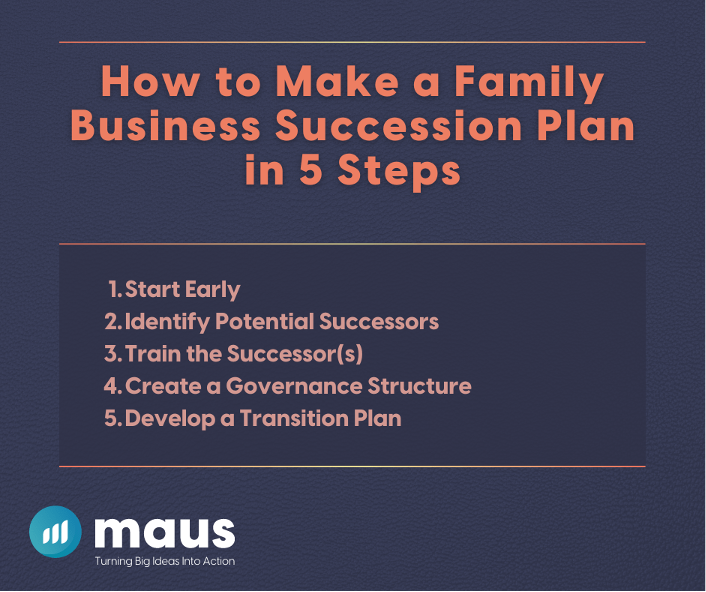
Here is how to do it:
- Start Early
Succession planning is not something you can do overnight. It requires years of preparation. To ensure a smooth transition, begin planning at least 5-10 years before you plan to step down.
- Identify Potential Successors
Choosing the right successor is crucial. It could be a family member, a group of family members, or even an outside party. Make sure they have the skills and experience needed to run the business.
- Train the Successor(s)
It is not enough to name a successor; they must be trained. Gradually introduce them to different aspects of the business to build their expertise. This ensures they are ready to lead when the time comes and maintain business continuity.
- Create a Governance Structure
A solid governance structure helps to manage family dynamics and ensure the business runs smoothly. It includes formal roles, responsibilities, and decision-making processes, making the transition seamless for family business owners.
- Develop a Transition Plan
A clear transition plan lays out the timeline for handing over responsibilities. It should cover legal aspects, financial issues, and daily operations, ensuring no gaps in leadership.
When conducting a financial analysis for retirement planning during this stage, it is essential to assess whether the outgoing generation has the resources it needs for estate planning and retirement.
Common Challenges in Family Business Succession Planning
Every family business faces unique challenges when it comes to planning.

4 Common Challenges in Family Business Succession Planning are:
- Communication Gaps
Family businesses often struggle with open communication. One generation may hesitate to give up control, while the next generation may not feel fully prepared to take over the leadership roles. This can lead to confusion and conflicts.
- Lack of Clarity in Successor Selection
If no clear successor is identified early on, tensions can rise. This lack of clarity can also lead to mismanagement or decision-making delays.
- Emotional Factors
Succession planning is often emotionally charged. Family members may have different expectations, which can make the process difficult. Having an objective outside advisor can help alleviate some of these pressures.
- Financial and Tax Implications
Transferring a business involves financial and tax complexities, especially when dealing with estate planning and transferring assets to surviving spouses. Working with financial advisors and drafting a buy-sell agreement ensures a smooth transition without incurring unnecessary tax liabilities.
How to Overcome Family Business Succession Challenges
To overcome these challenges, families must approach succession planning with objectivity, early planning, and open communication. Engaging external advisors—like a Certified Exit Planning Advisor (CEPA)—can offer unbiased guidance.
Best Practices for Family Business Succession
Implementing best practices ensures a smooth and successful transition in family businesses.
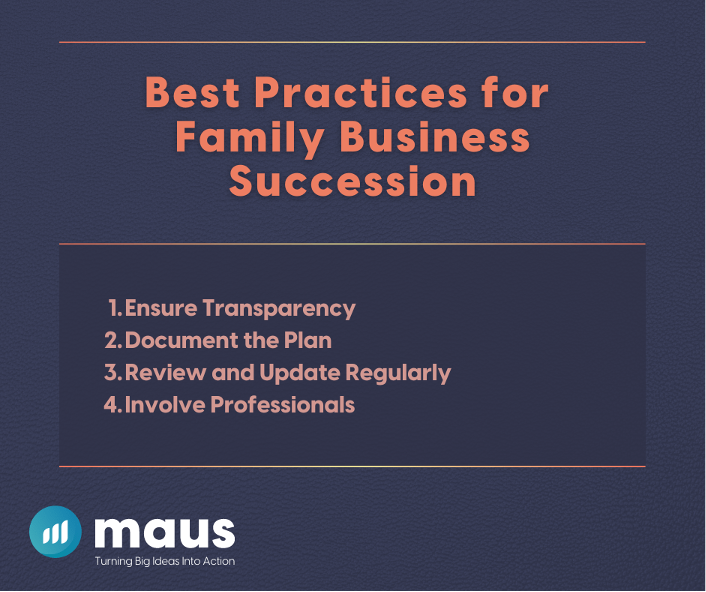
Here are some best practices to keep in mind when creating your family business succession plan:
- Ensure Transparency
Be open with all family members about your plans. This will reduce the risk of misunderstandings and ensure everyone is on the same page.
- Document the Plan
Put your succession plan in writing. Documenting the process ensures that all parties understand their roles and responsibilities.
- Review and Update Regularly
Family businesses evolve. Review your succession plan every few years to ensure it remains relevant and adjusts to new circumstances.
- Involve Professionals
Work with professionals like Certified Exit Planning Advisors (CEPA) and legal experts to ensure your succession plan is comprehensive and legally sound.
Conclusion: Start Planning Your Family Business Succession Today
Family business succession planning ensures your company thrives after the current generation steps down. By starting early, selecting the right successor, and creating a clear transition plan, you can ensure the long-term success of your business. Want to know more about planning a successful family business succession?
External Sources:
- Harvard Business Review, for research on family business succession: HBR Article on Family Business Succession
- Family Business Consulting Group, for expert advice on overcoming challenges in family business transitions: Family Business Succession Guidelines
Now is the time to invest in you, your family, and your business.
5 Most Recent Articles
 Are You Building a Business- or Just a Job?June 5, 2026 - 8:00 am
- Reduced Risk – The Hidden MultiplierMay 18, 2026 - 10:00 am
- How Scalable Systems Boost Your Business ValueMay 4, 2026 - 10:00 am
- Why Your Business Needs to Run Without YouApril 20, 2026 - 8:00 am
- Why Predictable Cash Flow Matters More Than ProfitApril 6, 2026 - 8:00 am


