
The Role of Family Members in Business Succession Planning

Family businesses are the backbone of many economies, with deep-rooted values and traditions spanning generations. However, one of their most critical challenges is ensuring a smooth transition from one generation to the next. This process, known as family business succession planning, is essential for preserving a family enterprise’s legacy, values, and profitability.
Yet, studies show that less than one-third of family businesses successfully transition to the second generation, and only a fraction make it to the third. With so much at stake, developing a well-structured succession plan is crucial to overcoming potential pitfalls.
Understanding Family Business Succession Planning
Family business succession planning involves preparing and transferring leadership and ownership from one generation to the next. It requires clear communication, strategic planning, and understanding of family dynamics. Key elements include:
Defining Roles and Responsibilities
Establish who will take over leadership roles and how other family members will remain involved in the succession planning for family businesses. Clear communication here is essential to ensuring a smooth transfer of ownership.
Creating a Written Plan
Documenting every aspect of the transition plan ensures clarity and alignment for everyone involved, from the business owner to key stakeholders.
Training and Mentoring Successors
Providing the next generation with the necessary skills, knowledge, and experience is critical to passing the business to the next generation effectively.
Addressing Financial and Legal Considerations
Ensuring the transition is tax-efficient and compliant with regulations, including estate planning and drafting a comprehensive buy sell agreement, is vital for safeguarding the business’s future.
A detailed and transparent plan can prevent disputes, build trust, and secure the legacy of the small business.
The Importance of Involving Family Members Early
Involving family members early in the succession planning is vital to fostering trust and collaboration. Open discussions about the family’s vision, values, and long-term goals can help align expectations and reduce conflicts. A well-thought-out plan secures the business’s future and strengthens family bonds.
According to an article by FT, family businesses with written values are better prepared for succession. These businesses tend to be more communicative and transparent, fostering a culture of trust. Engaging the next generation early and operationalizing shared values can bridge generational gaps and ensure a smooth transition.
Key Strategies for Effective Succession Planning
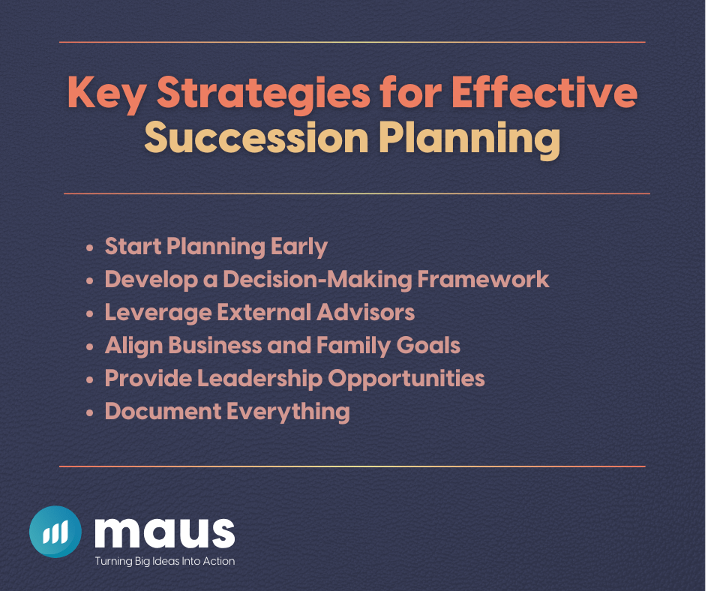
- Start Planning Early
Succession is a process, not an event. Begin planning years in advance to ensure a seamless transition.
- Develop a Decision-Making Framework
Establish clear governance processes and dispute resolution mechanisms.
- Leverage External Advisors
Bring in experts to guide the planning process and provide unbiased perspectives.
- Align Business and Family Goals
Ensure the plan balances the business’ needs with family interests and values.
- Provide Leadership Opportunities
Give successors opportunities to lead projects, manage teams, and make key decisions.
- Document Everything
Document all aspects of the plan from roles and responsibilities to financial arrangements to avoid misunderstandings.
Overcoming Common Challenges
Family business succession planning is fraught with challenges, including sibling rivalries, differing visions, and resistance to change. To address these:
- Encourage Open Communication:Hold regular family meetings to discuss succession-related topics.
- Establish Clear Criteria for Leadership:Define the qualifications and competencies required for leadership roles.
- Create a Transition Timeline:Set clear milestones for transferring responsibilities and ownership.
- Focus on Trust-Building:Embed high-trust behaviors, such as sincerity, reliability, competence, and care.
An expert perspective can be invaluable in resolving conflicts and ensuring objectivity.
As highlighted in the Harvard Business Review’s article “Plan a Smooth Succession for Your Family Business,” balancing control and collaboration is key to successful transitions.
Conclusion
Now is the time to invest in you, your family, and your business.
5 Most Recent Articles
 Why Every Business Owner Needs an Exit Plan!June 17, 2026 - 2:53 pm
- Why Every Business Owner Needs an Exit Plan!June 15, 2026 - 8:00 am
- Are You Building a Business- or Just a Job?June 5, 2026 - 8:00 am
- Reduced Risk – The Hidden MultiplierMay 18, 2026 - 10:00 am
- How Scalable Systems Boost Your Business ValueMay 4, 2026 - 10:00 am


